
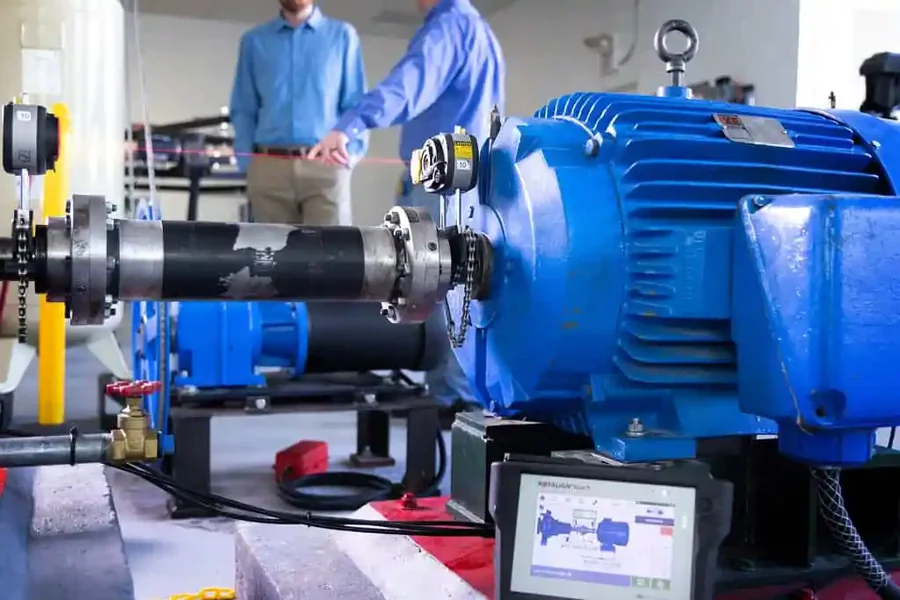
The maintenance of rotating equipment plays a vital role in various industries, including manufacturing and energy. Some of the equipment includes motors, turbines, and fans. These machines operate at high speeds. As a result, even the slightest imbalance in the equipment can cause damage. Dynamic balancing is a precise technique used to balance the equipment. It involves the correction of unbalanced equipment. It plays a vital role in the maintenance of equipment. It is a worthwhile investment. In the discussion below, we shall explore the advantages of dynamic adjustment.
Enhancing Equipment Longevity
One of the first and foremost advantages of active balancing is that equipment life is extended. An unbalanced rotor tends to create excessive vibrations, which puts undue stress on bearings, shafts, and couplings. Eventually, this stress causes equipment failure. Machine balancing eliminates this problem by removing excessive vibrations, allowing equipment to run optimally. Well-balanced equipment tends to run smoothly with less friction and stress, resulting in longer equipment life. This advantage is particularly important for high-speed equipment because excessive damage occurs even with minor imbalances. Ultimately, extending the life of machinery reduces the frequency and cost of equipment replacements.
Improving Operational Efficiency
This has a direct impact on the efficiency of the operation. Excessive vibrations in a rotating piece of equipment mean that the operation will be less efficient, as the machine has to work harder to overcome the imbalance. When the machine is balanced, the efficiency improves, and the machine can operate at the desired output. This has a big impact on businesses that use many machines simultaneously, as the cost savings on the amount of energy used can be considerable. Another impact that can be felt is the consistent speed and torque that the balanced machines can provide, which can be vital for businesses that require precision, such as chemical mixers.
Reducing Maintenance Costs
Unbalanced equipment may require more maintenance to deal with the effects of vibration, e.g., bearing wear or loose bolts, among others. Active balancing eliminates these effects, enabling maintenance personnel to focus on scheduled maintenance instead of corrective ones. Correcting unscheduled downtime saves a company money by preventing costly shutdowns and increasing the time between major overhauls. Companies that invest in excellent dynamic balancing services benefit from predictable maintenance cycles, lower spare parts usage, and reduced labor expenses, ultimately improving their bottom line. The cost of balancing is insignificant compared to the savings obtained from reduced unscheduled maintenance, among other benefits. It also allows maintenance personnel to focus on other critical activities, hence increasing the overall productivity of a plant.
Identifying Premature Failure
The major advantage that dynamic adjustment has is its capability to help detect areas that might result in premature failure. Through the use of vibration analysis, it is possible for a technician to detect anomalies that might be occurring in a rotor, which might be a result of some failure or weakness. For example, cracks in a turbine blade or a misaligned shaft might not be easily detected without a thorough balancing analysis. Through the detection of these areas, companies are able to avert a major failure, which might be catastrophic, and ensure that they have minimized safety hazards while maintaining their equipment. The analysis, therefore, ensures that a company has a proactive maintenance policy, which is beneficial for all its rotating systems.
Enhancing Safety and Workplace Environment
Active balancing has a significant impact on safety as well as work conditions. The vibrations of equipment cause noise pollution, which not only interferes with work conditions but also leads to hearing impairment of the personnel. Also, excessive vibrations may cause parts of the machine to come loose or fly off, thus posing a physical threat to the personnel. Well-balanced machines run quietly and smoothly, thus minimizing noise as well as the chances of accidents. In industries such as chemical processing, energy production, and manufacturing, it is essential to maintain a minimum level of vibration to comply with safety regulations regarding work conditions for the personnel. The stability provided by dynamic balancing creates a safer environment for work.
Dynamic adjustment is an essential process that must always be taken seriously to guarantee the reliability, efficiency, and safety of equipment used in rotational systems. It is critical to appreciate the significance of this process in fast-paced industrial environments, where ignoring the importance of rotor balancing can result in unnecessary wear and safety hazards. By taking this process seriously, companies not only safeguard their equipment but also provide a safe working environment for employees.