
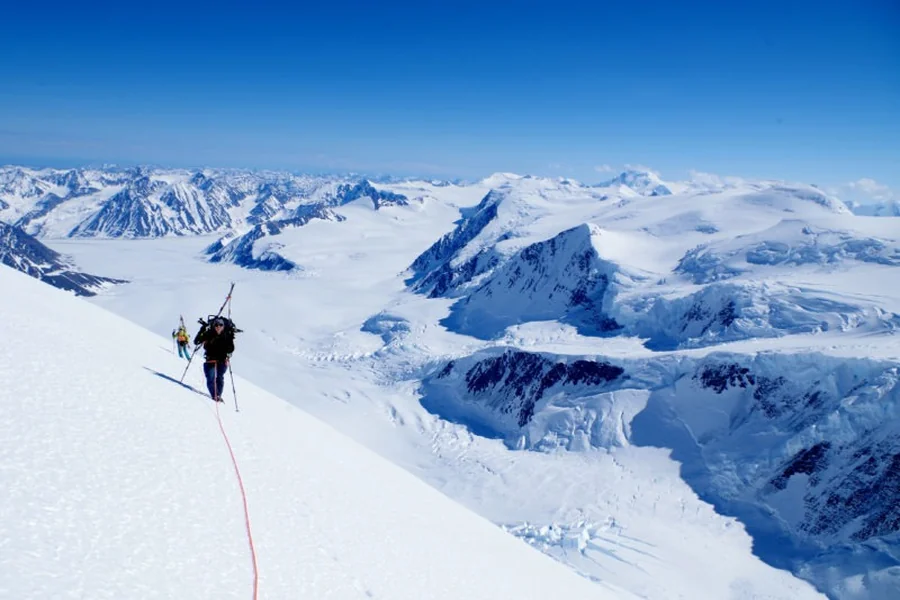
Mount Marcus Baker is a towering symbol of Alaska’s rugged wilderness and one of the most awe-inspiring mountains in the United States. Located within the Chugach Range, this majestic peak stands as the highest point in the range and is renowned for its challenging climbs, scenic beauty, and unique geological significance. In this comprehensive article, we explore everything you need to know about Mount Marcus Baker, including its history, geography, climbing routes, and why it remains a coveted destination for adventurers and nature enthusiasts.
Introduction to Mount Marcus Baker
Near the southern coast of Alaska, Mount Marcus Baker is situated in the Chugach Mountains. Its summit reaches an elevation of approximately 13,176 feet (4,016 meters), making it the tallest peak in the Chugach Range. The mountain is named after Marcus Baker, a prominent geologist and cartographer who contributed greatly to the exploration and mapping of Alaska in the late 19th and early 20th centuries.
Standing amidst some of the most dramatic glacial terrain in North America, Mount Marcus Baker offers an unforgettable experience for mountaineers and hikers alike. Its imposing height combined with the rugged landscape creates challenging weather conditions that demand respect and careful preparation.
Geographical Significance
The Chugach Mountains, of which Mount Marcus Baker is a part, stretch from the Kenai Peninsula in the south to the Copper River Valley in the north, covering approximately 250 miles.Snow-capped peaks, expansive glaciers, and dense forests fall in the range.. The proximity of Mount Marcus Baker to the coast results in significant precipitation, including heavy snow, which feeds the vast surrounding glaciers.
Mount Marcus Baker itself is surrounded by several massive glaciers, including the Harvard Glacier to the south and the Colony Glacier to the west. These glaciers create a spectacular landscape of ice fields and crevasses, drawing scientists interested in studying climate change and glaciology.
Historical Background
The mountain was first officially surveyed and named in honor of Marcus Baker, who worked extensively with the U.S. Geological Survey. He played a vital role in the early geological mapping and photographic documentation of Alaska during the late 1800s and early 1900s.
The first recorded ascent of Mount Marcus Baker was achieved in 1938 by a team led by Bradford Washburn, a legendary mountaineer and photographer. Washburn’s pioneering efforts helped popularize alpine climbing in Alaska, and his ascent of Marcus Baker remains a significant milestone in the history of American mountaineering.
Climbing Mount Marcus Baker
Mount Marcus Baker is considered a challenging climb due to its altitude, weather conditions, and technical sections similar like Everest climb while Island peak is considered easy one. The mountain presents several climbing routes, with the most common approach beginning from the Colony Glacier side.
Popular Routes
- Southwest Ridge Route
This is the most frequently used route, starting from the Colony Glacier. Climbers navigate across the glacier, ascend the Southwest Ridge, and confront mixed snow and ice terrain. This route demands proficiency in glacier travel, crevasse rescue, and alpine climbing techniques. - North Ridge Route
Less commonly used, the North Ridge involves more technical rock climbing sections and can be more exposed to adverse weather. It is recommended for experienced climbers familiar with Alaska’s changing mountain conditions.